ICE Operations Spike in 10 States as Early Voting Rises
Local officials and researchers report a sharp increase in immigration enforcement in the weeks before the midterm elections, even as early turnout numbers climb.
By Nina Patel ·
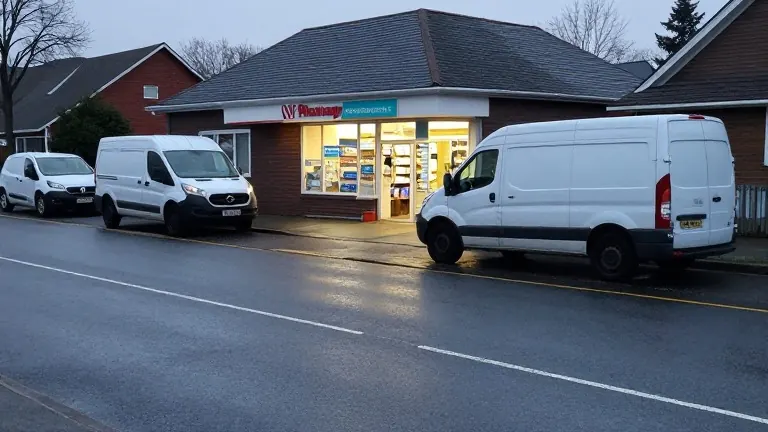
Immigration and Customs Enforcement activity has increased sharply in multiple states during October, coinciding with the start of early voting for the midterm elections.
Reports from NPR and its member stations indicate a rise in operations across rural Illinois, Oregon, Detroit, California, and New York. In Dover, New Jersey, local residents observed a spike in agent presence on Wednesday. Councilwoman Sandra Wittner received messages describing more than a dozen agents gathering outside a Walgreens.
The timing of these actions has drawn scrutiny from civil rights groups. Wendy Weiser of the Brennan Center for Justice at NYU Law School stated that the tactics appear designed to intimidate voters. She noted that while apprehension is common, early turnout is surging rather than declining.
New Jersey is not the only location reporting changes. Troy Brynelson, a reporter for Oregon Public Broadcasting, observed that ICE activity in Portland picked up in early October and continued through the month. He described the operations as concentrated in commercial areas. Brynelson characterized the increase as a noticeable uptick compared to levels seen in the summer.
In New York, an official within Mayor Zohran Mamdani's office confirmed the city noted a surge in activity. A volunteer from a local neighbor watch group, who requested anonymity due to fears of retaliation, described seeing numerous large operations in recent weeks. Her group documents scenes and alerts neighbors about their rights.
The Department of Homeland Security has not publicly shared timely information on specific operations, making it difficult to track details in real time. When asked about a recent surge, the agency responded that agents uphold immigration laws in all 50 states, seven days a week, and 24 hours a day.
Juan Proaño of the League of United Latin American Expressed concern that enforcement near polling stations could dissuade voters. He clarified that the issue is not agents at the polls but agents at the perimeter. He suggested that social media coverage of mass actions could discourage participation, even if the actions occur away from voting sites.
Weiser said there is no indication that the raids are affecting overall turnout. She reported huge surges in participation in communities of color, particularly in Latino communities and other groups targeted by ICE and DHS. She described the current environment as one where Americans are tuning out the intimidation tactics.
Wittner in New Jersey said neighbors were unsure if a major event was imminent. She noted that people were not feeling safe or comfortable during the day. The uncertainty stems from the lack of public data from the agency on where and how many agents are deployed.
Weiser emphasized that while the current data suggests the strategy is not suppressing votes, intimidation at the polls remains illegal. She advised that such incidents should be reported when they occur.
The increase in activity follows a pattern of enforcement seen in various urban and rural areas. Local officials in New Jersey and New York have documented these shifts through direct observation and community reports. The midterm elections approach as these states continue to monitor the pace of operations.
Source: Central Florida Public Media