Firefighters wait for replacement gear as PFAS costs pile up
A consolidated lawsuit seeks to make manufacturers pay for new equipment, but local departments struggle with the immediate expense.
By Christian Morales ·
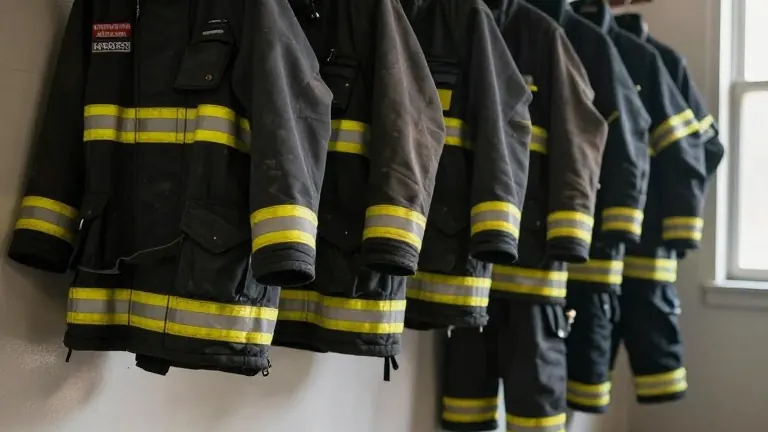
Firefighters across the United States continue to wear turnout gear containing per- and polyfluoroalkyl substances, or PFAS, while local governments debate how to fund replacements. The chemicals, which help resist heat and fire, have been linked to cancer in recent academic studies. This situation has created a financial burden for municipalities that must decide whether to pay for new equipment or wait for legal outcomes.
Chris Albani, a firefighter and representative for a Connecticut fire union, noted that PFAS are intentionally added to protective gear. He stated that the chemicals poison members. Court documents indicate that manufacturers have known about the toxicity of PFAS for decades but kept that information hidden. Despite this history, hundreds of thousands of firefighters still wear gear that contains the substances.
The cost of replacing the gear is a major obstacle. Albani explained that a basic set of pants and a jacket can cost up to $3,000. When including a helmet and gloves, the total per member reaches $5,000 to $8,000. For a department with 200 personnel, the expense becomes substantial for a local budget. A national survey by InvestigateTV found that half of the responding fire chiefs had not switched gear because their towns could not afford the price tag.
A class action lawsuit is currently consolidating five separate filings into a single case in Minnesota. Jennifer Sclar, an attorney representing fire unions and municipalities on the East Coast, is suing more than a dozen companies that manufacture gear or the materials used in it. Sclar argued that the defendants understood the dangers of PFAS long before the recent health alarms. The lawsuit seeks to make manufacturers pay for the cost of replacing the current equipment.
The defendants have largely declined to comment on the specific claims. 3M and DuPont did not respond to requests for comment on this case. In legal filings, 3M argued it did not manufacture the specific gear worn by the plaintiffs and noted no physical injuries were alleged. DuPont previously told another media outlet that the complaints lacked merit. The plaintiffs claim these companies told firefighters there was nothing to worry about while internally labeling PFAS as toxic as early as the 1960s and 1970s.
Ed Kelly, who leads the International Association of Fire Fighters, said the union wants manufacturers to pay for the replacement gear. He expressed skepticism about the new alternatives, noting that they must be independently tested to ensure no other harmful chemicals are present. This concern follows an incident in Quincy, Massachusetts, where the fire department bought new gear labeled as PFAS-free in 2025. Independent tests later revealed high levels of the chemicals, prompting Mayor Thomas Koch to call the situation outrageous at a press conference.
The manufacturer in the Quincy case stated in a public comment that it eliminated PFAS from its textiles the same year the gear was bought. The company also told InvestigateTV that the chemicals were not intentionally added and that testing showed very low levels. Albani said the experience has damaged trust between firefighters and gear companies. He noted that some leaders are uncertain about the safety of the alternatives, leaving crews in a state of limbo while they wait for clearer evidence of protection.
Albani described his current routine as drastically different from past years. He tries to avoid touching the jackets and pants he knows contain PFAS until it is absolutely necessary. Firefighters are breaking old habits as they wait for gear that allows them to save lives without potentially risking their own health. The consolidated case in Minnesota will determine the next steps for funding the transition to new equipment.
Source: KAUU · original report published
More News · Anchorage news · Report a business · Got a Story?