SpaceX Seeks $235 Billion Market Entry via Boost Mobile
After being denied direct network access by major carriers, Elon Musk’s company is negotiating with EchoStar to launch a phone service.
By Nina Patel ·
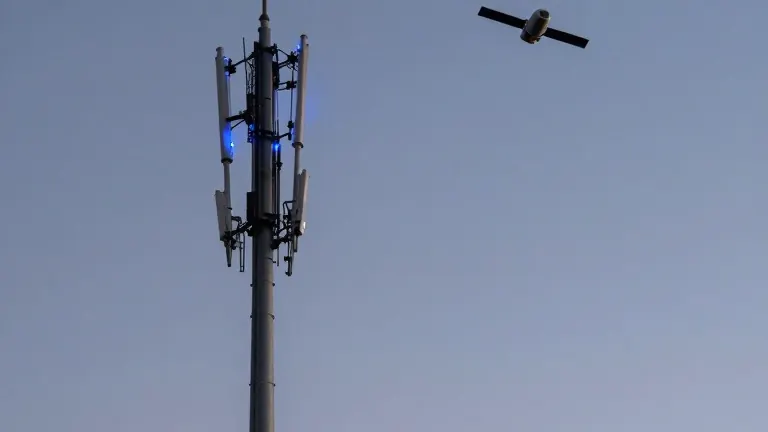
SpaceX is negotiating with EchoStar to launch a wireless phone service in the United States, according to two people familiar with the talks. The potential agreement would grant SpaceX access to the network of Boost Mobile, a discount carrier owned by EchoStar. This move follows a series of failed attempts by SpaceX leadership to secure direct access to the networks of Verizon, T-Mobile, and AT&T.
Elon Musk, the CEO of SpaceX, personally met with Charlie Ergen, the chairman of EchoStar, last month to discuss the deal. The proposed arrangement could result in SpaceX acquiring Boost Mobile or simply gaining access to its existing infrastructure. Boost Mobile currently leases its network capacity from AT&T and T-Mobile US. Access to these lease agreements would allow SpaceX to enter a U.S. wireless market that the equity research firm MoffettNathanson values at $235 billion.
Musk has spent recent months urging the heads of America’s top telecom companies to let SpaceX use their massive networks for a new mobile service. Verizon, T-Mobile, and AT&T all declined the request. The rejections have raised concerns within the industry that Musk might disrupt the market structure. SpaceX’s goal is to transform its more than 12,000 satellites into a major source of revenue while advancing its objective of establishing a human settlement on Mars. A reliable communication network is considered essential for that future colony.
SpaceX Chief Financial Officer Bret Johnsen stated on a recent earnings call that the company aims to become a major mobile carrier in the United States. Earlier this month, SpaceX agreed to purchase $8 billion worth of wireless spectrum licenses designed for cell service in areas where satellites cannot reach. Musk described this purchase as the final piece needed to provide complete phone coverage in America. He noted that SpaceX is developing new technology to alter the strategic landscape of cellular communication.
Experts point to technical barriers that SpaceX must overcome to compete with traditional carriers. Millions of cellphones are concentrated in urban centers, where direct-to-satellite connections are often inefficient. Tim Farrar, a satellite-industry analyst and president of TMF Associates, said SpaceX’s current satellite signal is not strong enough to support cell coverage indoors or in dense urban areas. A partnership with a carrier like Boost Mobile would allow SpaceX to provide service over traditional cell towers while it works to improve its satellite connectivity.
Executives at the major carriers have expressed skepticism about SpaceX’s ability to replicate the vast networks of cell towers and antennae that the company currently lacks. After Verizon’s CEO estimated it would take four to six years for SpaceX to build that infrastructure, Musk countered that the timeline would be approximately half that. Musk has a history of providing optimistic construction timelines. Drew Cupps, a portfolio manager at Polen Capital, warned that traditional carriers should question Musk’s ability to build the necessary infrastructure at their own risk.
Cupps pointed to Musk’s construction of a massive Supercharger network, which now includes 80,000 chargers worldwide, as evidence of SpaceX’s building capacity. He said the major carriers are right to be spooked and agitated by the prospect. Cupps argued that the first carrier to ally with Musk, either overtly or informally, could gain a strategic advantage over its rivals. He framed the situation as a major strategic question for the industry, noting that in five years, one entity will have moved and others may not.
Verizon and EchoStar declined to comment on the negotiations. AT&T and T-Mobile did not respond to requests for comment. SpaceX and Musk also did not respond to requests for comment. Three people familiar with the situation noted that a carrier’s lease agreement is not typically transferrable to a new buyer without the major carrier’s permission. This consent may be required for the proposed SpaceX service to launch.
The potential deal represents a back door for Musk to achieve a years-long dream of upending the wireless phone industry. By leveraging Boost Mobile’s existing infrastructure, SpaceX could bypass the immediate need to build its own ground-based network. This strategy aligns with Musk’s vision of transforming SpaceX into a mega-company that uses its technology to deliver an array of services. He estimates these revenue streams could reach $1 trillion annually as soon as 2027.
Source: Alaska Star · original report published
More Business · Anchorage news · Bad Service · Report a business · Got a Story?