DNR Commissioner Testifies on 20,000-Acre Mat-Su Land Transfer
Senators questioned state officials on the legality of no-cost land transfers to AIDEA, including a proposal near Houston that includes potential data centers.
By Christian Morales ·
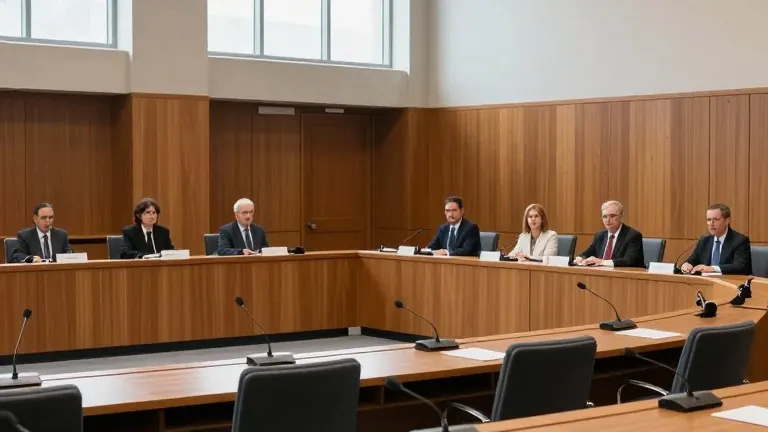
Anchorage, Alaska. DNR Commissioner John Crowther appeared before the Senate Resources Committee on Monday to address questions about the state's transfer of public lands to private entities at no cost. The hearing focused on a proposed 20,000-acre transfer near Houston in the Matanuska-Susitna Borough to the Alaska Industrial Development and Export Authority, or AIDEA.
The committee issued a legislative subpoena after Crowther declined to appear at an earlier hearing in October. Department officials stated at the time that the governor had not granted permission for him to testify. The transfer would allow AIDEA to create a multi-use industrial and energy development district. AIDEA has listed data center development among potential projects, a detail that has drawn criticism from local residents and legislators.
Sen. Cathy Giessel, R-Anchorage, chair of the committee, questioned the recent increase in no-cost transfers by the Department of Natural Resources. She noted that the land could potentially be leased for millions of dollars annually. Giessel stated, “It feels like an appropriation. An appropriation of a very, very valuable asset, and that is Alaska land, Alaska public land. So that authority rests with the Legislature, and that raises questions.”
Crowther told the committee that a final decision on the Mat-Su proposal is possible before the new governor takes office on Dec. 7. He acknowledged that the decision could face administrative appeals or lawsuits. Crowther said, “It’s of course subject to judicial review. So we anticipate moving through our process as expeditiously as possible. And some of those processes, we don’t have control over the timeline.”
A lawsuit challenging the proposal as unconstitutional was filed in state Superior Court on Oct. 22. The suit was brought by former University of Alaska Regent Eric Forrer and former state Rep. David Eastman. They aim to delay the transfer until after Gov. Mike Dunleavy leaves office. DNR issued a preliminary decision on the transfer in July and is currently reviewing more than 2,100 public comments. Opponents, including the Mat-Su Borough Assembly, have argued the proposal is too vague to serve a sufficient public purpose.
DNR officials maintain that AIDEA qualifies for the transfer under a “public and charitable use” statute because it is a state-owned economic development agency. AIDEA officials said it is unlikely that data centers will be built due to a lack of reliable energy sources. No projects or contracts have been confirmed. Crowther stated that using state land for development is a priority of the Dunleavy administration. He said, “I think it is very fair to say that using our land for development has been a governor’s priority, and consequently, the department’s been working on that in several different respects.”
The department recently changed regulations to expand the definition of “public purpose” to include private development that contributes to economic growth. In March, DNR adopted these changes after a public comment period. Sen. Forrest Dunbar, D-Anchorage, asked if the transfers would have been legal before this regulatory change. Crowther responded that the updated language clarifies existing state law and the department's authority. Giessel noted that a similar bill allowing such transfers failed to advance in the Legislature earlier in the year.
Senators also raised concerns about AIDEA's oversight and the lack of a reversionary interest in the Mat-Su proposal. A reversionary interest would allow land unsuitable for development to return to state ownership. Sen. Bill Wielechowski, D-Anchorage, called the arrangement a “huge loophole.” He pointed out that AIDEA’s board is appointed by the governor and does not report directly to the executive branch. Wielechowski said, “We’ve got a constitutional obligation to manage our resources, including our lands, and if you’re giving the lands away for nothing with no reversionary interest, very little protection for the public, to a board that’s not confirmed by the Legislature, has basically zero public oversight.”
Christy Collis, director of the Division of Mining, Land and Water, also testified at the hearing. She addressed concerns about a separate 885-acre parcel at Port MacKenzie slated for transfer to AIDEA for rail-support and cargo logistics. Collis said the department will evaluate farmers' concerns regarding the loss of productive agricultural land. A decision on the Port MacKenzie parcel is expected in the coming months, though no specific timeline has been set.
Source: Alaska Public Media · original report published
More News · Anchorage news · Report a business · Got a Story?