Doctors Explain the Mechanics Behind Blackened Toenails
Podiatric surgeons describe how repetitive impact ruptures blood vessels under the nail plate and outline specific steps to manage the injury.
By Christian Morales ·
Three cases of runner's toe occurred in a single year for one individual, resulting in the loss of a toenail each time. The condition is medically known as a subungual hematoma. It involves bleeding beneath the nail bed. Dr. Jacob Wynes, a podiatric surgeon at the University of Maryland School of Medicine, notes that the discoloration appears red, purple, or black. The injury can cause throbbing pressure. In some instances, the nail eventually detaches from the toe.
The problem is not limited to runners. Dr. Kristin Hullings, an assistant professor of clinical orthopaedic surgery at Temple University, states that anyone can develop the condition. Poorly fitting shoes are a primary cause. Athletes in soccer, football, tennis, skiing, hiking, and golf are also prone to the injury. Sudden trauma, such as dropping an object on a toe or stubbing it, can also trigger the bleeding. Hullings recommends seeing a doctor after sudden trauma to rule out a fracture.
Repetitive trauma is the main driver for chronic cases. Dr. Rull James Toussaint, chief of the foot and ankle division at the University of Florida College of Medicine, explains that running downhill or covering high mileage increases risk. Shoes that are too loose allow feet to slide. Shoes that are too tight squeeze the toes. Long toenails, heat, and sweat also contribute to friction. This forceful contact between the toe and the shoe ruptures blood vessels in the nail bed. Blood then collects under the nail plate.
Treatment depends on the state of the nail. If the nail remains intact and painless, it will likely grow out on its own, according to Toussaint. If the nail partially or fully falls off, the exposed nail bed requires care to prevent infection. The first step is cleansing the toe with mild soap and water or a saline solution. Hullings advises leaving any attached portion of a partially detached nail in place. It acts as a splint. Loose edges should be trimmed to prevent snagging on socks or sheets.
Applying a topical antibiotic ointment keeps the area moist and prevents infection. Wynes suggests using a non-adherent bandage for fully detached nails. The bandage should be changed daily. Hydrocolloid bandages should be avoided because they stick to the healing tissue. For loose nails, Toussaint says to leave them intact and let them fall off naturally. Adhesive strips can hold the nail in place while wearing shoes. Silicone sleeves can protect the toe during mild running sessions.
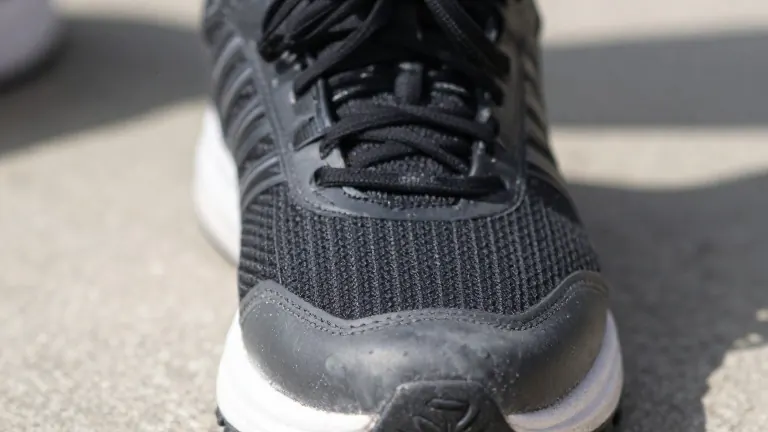
Prevention focuses on correcting the underlying cause. Toussaint states that improperly fitted sneakers are the most frequent culprit. Feet should be measured professionally at night when they are most swollen. Wynes recommends ensuring at least one thumb's width of space between the longest toe and the top of the shoe. Breathable, moisture-wicking socks help reduce friction and heat buildup. Injinji makes toesocks that separate each toe to prevent skin-on-skin friction.
Source: NBC News