Holmes Final Month: A24 Documentary Tops Box Office Records
Nathan Fielder and Lance Oppenheim explain the behind-the-scenes decisions that turned a private family portrait into a commercial and critical phenomenon.
By Katherine Brooks ·
The A24 documentary You Can See Everything has become one of the most successful films of its genre in North American history. The three-hour feature, which is currently being discussed as a potential first documentary nominee for the best picture Oscar, has dominated box office numbers in the weeks since its release.
The film chronicles the final month Elizabeth Holmes spent with her husband, Billy Evans, and their children before she began an 11-plus-year prison sentence for fraud. The project originated from a secret screening at the Telluride Film Festival over Labor Day weekend. While audiences know the general premise, the specific dynamics between the family and the filmmakers remained largely unknown until recently.
At the SCAD Savannah Film Festival, Nathan Fielder and Lance Oppenheim provided their first public insights into the production. Oppenheim described the setting as a bubble surrounding a real-life human optical illusion. The duo explained that Fielder was not originally planned to appear on camera. However, the couple frequently directed questions at him, which pulled him into the frame.
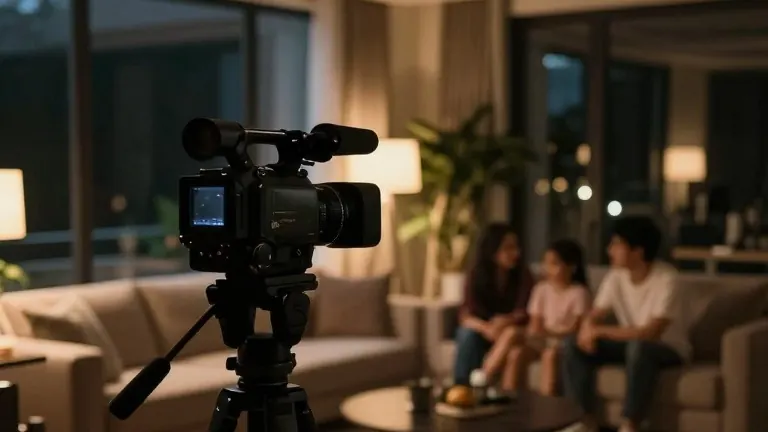
Oppenheim noted that an operator panned to Fielder, revealing his potential as an accidental investigator. This role allowed him to test Holmes' version of reality against the crew's observations. The filming setup evolved from a single-camera approach to three cameras and two operators. This change was necessary because a single lens missed the first nonverbal reactions to questions, which Fielder identified as key to judging sincerity.
The couple provided the crew with daily schedules, allowing the team to set up before the family woke since the front door remained unlocked. This access changed how scenes were perceived. For example, a shot of Evans heading to the gym carried different weight when it was his own idea for the documentary. Oppenheim said the limited access forced them to rely on traditional documentary techniques, including vérité and on-camera direction.
The filmmakers repeatedly offered to leave, acknowledging this was a mother's final month with her children. Each time, the family asked them to stay. Fielder called this dynamic part of the mindfuck of the project. When asked if he understood why the couple wanted them there, Fielder answered bluntly: "Fuck no." Oppenheim described the film as an evolving Rorschach test, noting that Holmes' behavior seemed sometimes unconscious and sometimes fully aware.
In the film's second half, the team sought to track the outcome of Evans' business. Evans had promised results in 365 days, but it took two years. Outside the San Diego community, many people viewed Holmes as toxic and declined to speak with the crew. This led the directors to Amanda Seyfried, who won an Emmy for playing Holmes in Hulu's The Dropout. Seyfried agreed to re-enact key conversations to finish the narrative.
Fielder and Oppenheim did not know Seyfried before contacting her. She invited them to her apartment with cameras for their first in-person meeting. Although she initially stated she had no interest in doing it again, she began imitating Holmes. Oppenheim observed that she seemed to have unfinished business. The directors chose this sequence as the ending in the edit, feeling it marked the end of the road once the audience had the same information they did.
Source: The Hollywood Reporter
More Culture · National news · Report a business · Got a Story?