Supreme Court Takes Up Texas Death Row Case
The high court will hear arguments on whether a late-filed intellectual disability claim can stay a 2006 murder conviction.
By Christian Morales ·
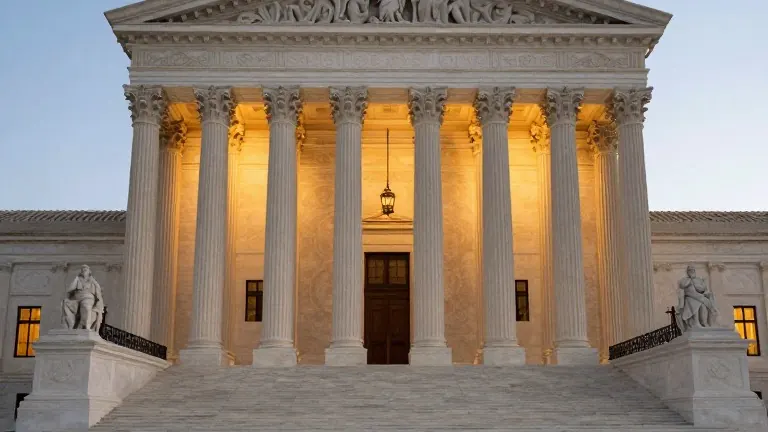
The U.S. Supreme Court is set to hear arguments on Wednesday regarding a procedural dispute involving a Texas death row inmate. The case centers on Dexter Johnson, who was convicted of capital murder for the 2006 killing of 23-year-old Maria Aparece. His execution, originally scheduled for May 2019, was stayed by a federal court after his legal team raised a claim of intellectual disability.
The legal challenge was filed just days before Johnson's scheduled execution. His attorneys relied on the 2013 update to the American Psychiatric Association's Diagnostic and Statistical Manual of Mental Disorders, Fifth Edition, known as the DSM-5. This update shifted the clinical focus from rigid IQ thresholds to adaptive functioning deficits. In a filing to the Supreme Court, Johnson's legal team wrote that the trial expert withdrew the premise that had previously foreclosed a diagnosis. Two additional experts subsequently concluded that Johnson meets the definition of intellectual disability.
Ethan Nutter, a lawyer who filed an amicus brief on behalf of the National Association of Criminal Defense Lawyers, noted that the medical community's understanding of the condition has evolved over the last decade or two. "Under the current understanding, Mr. Johnson meets that definition of intellectual disability," Nutter said. He emphasized that the Supreme Court has previously ruled it unconstitutional to execute an intellectually disabled person.
The Texas Department of Criminal Justice's Correctional Institutions asked the Supreme Court to review the Fifth Circuit's finding in February 2026. In its brief, the department argued that the lower court's holding erases the strict limits on claims based on new evidence. It further stated that for the people of Texas and the families of Johnson's victims, justice delayed is justice denied.
Protasio Aparece, the father of the victim, filed a separate amicus brief. His legal team wrote that Protasio has an interest in seeing justice carried out for his daughter. They added that he wants to ensure no other family endures the decades of excessive delays that he and his family have suffered.
The specific procedural issue before the justices is whether a federal court can address a second or successive habeas petition. Nutter described the question as narrow, focusing on the court's authority to hear the claim. The Supreme Court is expected to issue a decision in the case by June 2027.
Source: KAUU · original report published
More News · Anchorage news · Report a business · Got a Story?