Los Angeles fire smoke delivered lead levels 80 times normal to 7 million residents
Caltech researchers found the Eaton Fire plume contained 50 times the lead, three times the arsenic and seven times the halogens measured in a vegetation wildfire.
By Katherine Brooks ·
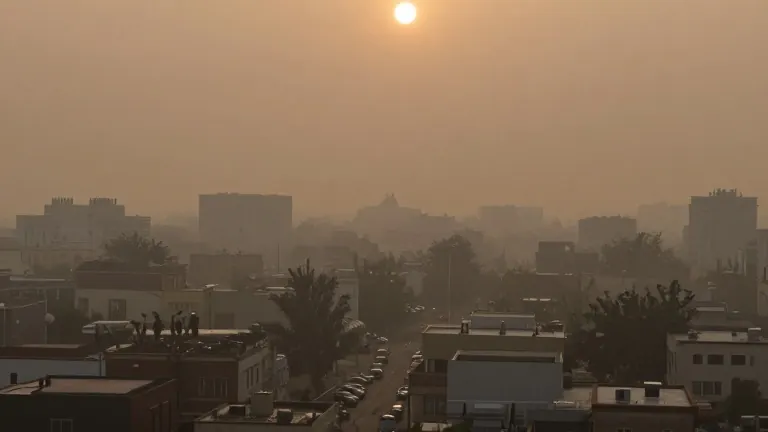
About 7 million Los Angeles residents were exposed for a 24-hour period to lead levels more than 80 times the typical background amount at the peak of the Eaton Fire in January 2025.
Researchers at the California Institute of Technology analyzed smoke from the Eaton Fire and compared it to smoke from a 2024 vegetation fire in Riverside County. The urban plume contained 50 times more lead, three times more arsenic and seven times more halogens, which include chlorine and bromine. The study was published Wednesday in the journal Science Advances.
The fires in Altadena and Pacific Palisades ignited Jan. 7, 2025, killing at least 31 people and destroying more than 16,000 structures. The buildings and their contents released metals and chemicals into the smoke. Researchers used instruments in ASCENT, a U.S. network of air quality monitors, to measure fine particulate matter every hour during the fires. Ng said ASCENT is the first U.S. network able to measure the chemical composition of airborne particles in real time. "The main, key finding is really that wildfire smoke is very different fundamentally from the urban smoke," said Nga Lee "Sally" Ng, an author of the study.
Ed Avol, a professor emeritus at the Keck School of Medicine at the University of Southern California who has researched air pollution health effects for decades and was not involved in the study, said heavy metal exposure at this level was consistent with what he would expect but was "certainly surprising because we haven't been able to document this sort of thing." He noted the study made measurements hour by hour across the sampling network, while typical air monitoring runs a couple of times a week at best. Yaguang Wei of the Icahn School of Medicine at Mount Sinai, also not involved in the work, said the results were not surprising: "When fires burn properties, they're also burning a lot of lead on your wall paint and the plastics and electronics and those are very toxic" when they burn.
Haroula Baliaka, a co-author, said comparing urban and wildland fire smoke fills a gap in research. Wildfires are growing larger and more frequent, and as development pushes fires into cities, monitoring and emergency response will have to change. Wei said the findings carry policy implications and called for more investment in wildfire monitoring, public alerts and prescribed fires.
Lead is a neurotoxin that can affect children's development and raise blood pressure in adults, and scientists do not yet know how short-term high exposure affects health. Arsenic exposure is tied to several cancers.
Source: Alaska Star · original report published
More News · Anchorage news · Report a business · Got a Story?