FDA Clears Generic HIV Shot for Global Use
The approval allows the twice-yearly injection to be sold at $40 a year in 120 low- and middle-income countries.
By Christian Morales ·
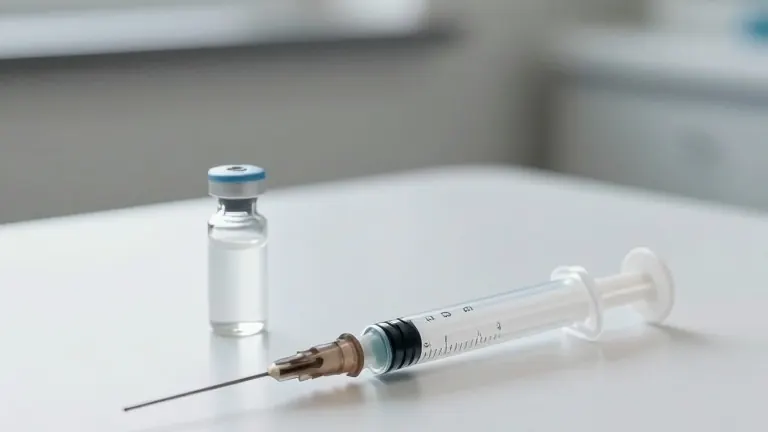
A generic version of lenacapavir, the only twice-a-year injection used to prevent HIV, received U.S. Food and Drug Administration approval on Monday. The decision allows the medication to be sold at a low cost in 120 low- and middle-income countries. The price is expected to be $40 per person annually, matching the cost of current daily preventive pills.
The announcement came from the manufacturer and partner organizations that helped accelerate the drug's development. Carmen Pérez Casas, HIV lead for the grant-making organization Unitaid, said the new option offers better protection because it requires less frequent dosing than daily pills. She noted that missed daily doses leave people unprotected, whereas the shot eliminates that gap.
Two studies found the injection nearly eliminated new infections among people at high risk. Carolyn Amole, who leads the HIV program for the Clinton Health Access Initiative, stated that the affordable generic should help expand pre-exposure prophylaxis to the 20 million people worldwide who need it. She said scaling to that level could begin to end the HIV epidemic.
The World Health Organization reported that 41 million people were living with HIV last year, and 570,000 died from HIV-related causes. The new approval is designated as tentative by the FDA because the brand-name version, Yeztugo, remains under patent protection in the United States. The U.S. list price for Yeztugo is $28,218 a year before insurance.
Gilead Sciences, which makes Yeztugo, has been the sole supplier of lenacapavir until now. Last year, Gilead established royalty-free licensing agreements with six generic manufacturers to enable production in sub-Saharan Africa, Asia, and Latin America. A Gilead spokesperson said the company believes it enabled the fastest path to expanding access for communities most affected by HIV.
Dr. Reddy’s Laboratories, based in India, developed the specific generic version approved by the FDA. The project was brokered by Unitaid, the Clinton Health Access Initiative, and Wits RHI, an African health research institute. Common side effects include injection site reactions, headache, and nausea. Patients must undergo HIV testing before starting the drug and with each injection to detect drug-resistant strains.
Saiqa Mullick, director of implementation science at Wits RHI, said rapid testing is common in low- and middle-income countries for this requirement. The partners said the generic should become available in some locations within weeks, though countries with their own regulatory processes may take longer. Other generic versions made by the remaining manufacturers have not yet been approved by the FDA.
Source: Alaska Star · original report published
More News · Anchorage news · Report a business · Got a Story?